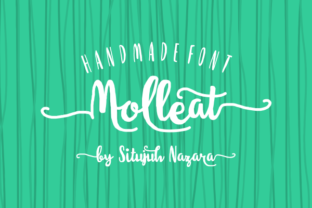
Molleat: A Handwritten Font for Makers
The late afternoon sun was hitting my workbench just right, illuminating the stack of kraft paper tags I had cut earlier that morning. I was working on a small batch of soy wax candles, each one poured with care and scented with lavender and vanilla. But as I stared at the blank labels, something felt missing. The design was clean, the colors were earthy, but the text lacked soul. I needed a typeface that didn’t just sit on the paper but felt like it belonged there—something that echoed the handmade nature of the product itself. That is when I opened Molleat, a stunning font created by Situjuh Nazara, and suddenly, the entire aesthetic clicked into place.
For those of us who spend our days designing, cutting, printing, and packaging, finding the right typography is often the difference between a product that looks homemade and one that looks professionally curated. Molleat is not just another addition to the vast library of Fonts available online; it is a deliberate choice for creators who value warmth, elegance, and a touch of whimsical charm. As part of the Script Amp collection, it brings a specific energy to design assets that rigid, geometric typefaces simply cannot match.
Bringing Warmth to Product Labels and Packaging
When I typed out "Lavender & Vanilla" using Molleat, the letters flowed with a natural rhythm. The strokes are thick enough to be legible even at smaller sizes, yet delicate enough to maintain an air of sophistication. This balance is crucial for packaging design. Whether you are creating labels for artisanal jams, skincare bottles, or boutique clothing tags, the font needs to communicate quality before the customer even touches the product.
I tested Molleat on various materials. On matte vinyl stickers, the curves held their shape beautifully without losing detail. On textured cardstock, the ink settled into the fibers in a way that enhanced the handwritten feel of the typeface. This versatility makes it an excellent tool for brand identity. Consistency is key in building customer recognition, and using a distinctive script like Molleat across your product lines—from thank you cards to shipping labels—creates a cohesive visual story.
Elevating Wedding Stationery and Invitations
Beyond physical products, Molleat shines in the realm of paper goods, particularly wedding invitations and greeting cards. There is a romantic quality to its letterforms that feels personal and inviting. I recently designed a set of digital printable invitations for a friend’s rustic-chic wedding. The goal was to avoid the stiff, formal look of traditional serif fonts while maintaining elegance. Molleat provided the perfect middle ground.
For wedding stationery, the font works exceptionally well for names and dates. It draws the eye immediately, acting as a focal point on the page. However, it is important to remember that Molleat is a display font. It is best suited for short phrases, titles, and decorative wording rather than long paragraphs of body text. Pairing it with a clean sans serif font for the details—such as the venue address and RSVP information—creates a harmonious contrast that improves readability without sacrificing style. This combination of a flowing script with a minimalist sans serif is a classic technique in editorial design and modern typography.
Practical Tips for Cutting Machines and Printables
If you are a user of Cricut or Silhouette machines, you know that not all scripts are created equal when it comes to cutting. Complex ligatures and overlapping letters can sometimes cause issues if not handled correctly. Molleat is designed with connectivity in mind, which means the letters flow into one another naturally. When preparing files for cutting, ensure you are using the correct file format that supports these ligatures, such as OTF or TTF, rather than converting to SVG prematurely unless you are prepared to weld the letters manually.
For printable wall art and planner pages, readability is paramount. I found that Molleat works best when given enough breathing room. Crowding the text diminishes its impact. When designing digital downloads, consider the scale. A quote printed on an 8x10 inch sheet will have a different presence than the same quote on a large canvas. Test your designs by printing them at actual size. What looks perfect on a computer screen might appear too thin or too dense on paper. This hands-on testing phase is essential for any serious creative font user.
Enhancing Digital Presence and Social Media
In today’s market, your online presence is just as important as your physical products. Molleat is a powerful asset for social media graphics and web design. Using it in your Instagram stories, Pinterest pins, or website headers can reinforce your brand’s aesthetic. Because it has a distinct personality, it helps your content stand out in a crowded feed. Whether you are announcing a new shop update, sharing a behind-the-scenes look at your process, or promoting a seasonal sale, the font adds a layer of professionalism and creativity.
For logo design, Molleat can serve as the primary element if your brand name is short and memorable. Its fluid lines suggest approachability and craftsmanship, which are highly valued traits in the handmade community. However, always check the licensing terms. As a commercial font, it is essential to understand the scope of its use. Most premium fonts allow for unlimited physical products and digital downloads, but restrictions may apply to web embedding or logo trademarking. Always review the included license file to ensure you are compliant when selling merchandise.
Pairing and Design Harmony
To get the most out of Molleat, experiment with font pairing. While it pairs beautifully with simple sans serifs, it also works well with a subtle serif font for a more vintage or literary feel. Avoid pairing it with another busy script or a overly decorative handwritten font, as this can create visual clutter. The goal is to let Molleat be the star. Use neutral colors and ample white space to let the curves and swashes breathe.
Consider the mood of your project. For holiday tags, Molleat can evoke nostalgia and warmth. For modern minimalist tote bags, it adds a touch of organic softness against stark geometry. For seasonal craft designs, such as autumn harvest signs or spring garden markers, the font’s natural flow complements organic themes perfectly.
Finalizing Your Design Assets
Before you send your files to print or upload them to your shop, take a moment to review the technical details. Check for available alternates and swashes. Many high-quality scripts like Molleat include multiple versions of certain letters, allowing you to customize the flow and avoid repetitive patterns in longer words. Utilizing these features can make your design look truly bespoke.
Also, consider multilingual support if you plan to expand your market. A versatile premium font often includes extended character sets, which is invaluable for reaching a broader audience. Ensure that the file formats you download are compatible with your design software, whether you are using Adobe Illustrator, Photoshop, Canva, or Procreate.
Ultimately, Molleat is more than just a set of characters; it is a tool for expression. It allows makers to infuse their products with personality and care. From the first sketch to the final package, the right typography can elevate your work, making it not just something people buy, but something they connect with. As you continue to create, let fonts like Molleat inspire you to pay attention to the details, because in the world of handmade goods, the details are everything.